Introduction
This article stemmed from a curiosity about AI-generated art, and the current debates across the art and creative industries. I entered a prompt into an AI model - 'in concise simple terms, what really are AI‑generated artworks/ photos images?'
AI quoted this answer -
The art world is in the middle of technological change. Generative‑AI tools such as Midjourney, DALL‑E, Stable Diffusion, Adobe Firefly and recent video models are no longer experimental but everyday instruments for many creators.
At the same time, traditional painters, sculptors and printmakers continue to offer works for sale that are wholly human hand‑made. This dualistic environment raises fresh questions for artists, collectors, and auction houses alike, around the topics of value, authenticity, authorship, copyright, and future market dynamics.
Quotes from current reputable sources for consideration
1. Quotes and definitions - AI-generated Art v. Human-made Art from several academic and research sources (2025–2026):
- Intentionality and Emotion (University of Plymouth/SCIRP):"AI art has neither intent nor carries a possibility of human connection... The creativity from a human-made artwork seems more soulful." (1.2.4, 1.2.8)
- Originality vs. Synthesis (ResearchGate/University of Plymouth):"AI-generated art... is derivative as it doesn't feel emotions; it mimics patterns it has been trained on. Artists bring originality, a human's life story, cultural roots, and perspective make each artwork unique." (1.4.1, 1.2.8)
- Perceived Value (Columbia Business School/ResearchGate):"Participants valued art labeled as AI generated 62 percent lower than art labeled as human made... [This suggests] the economic value associated with art is influenced not only by aesthetic appeal but also perhaps by the perceived authenticity and creative process behind the artwork." (1.1.3, 1.3.2)
- Human-Machine Collaboration (Columbia University):"While AI tools may streamline routine tasks, they cannot replicate the human aspects of art-making, which become more focused on choosing, contextualizing, and critiquing... You can't make a narrative without thinking about the social power structures behind each choice." (1.4.6)
- Functional Differences (ResearchGate - 2025 Study):"Human creativity is defined by emotional depth, personal expression, and cultural context, whereas AI relies on pattern recognition and data-driven processes to generate images." (1.4.9)
- Definition of "Real" Art (ResearchGate/2026 Update):"If art is defined as the channel for emotional transfer... AI-created arts are far less likely to be considered as real arts as they lack original emotion and cannot express its inner meaning for the viewers effectively." (1.4.5)
2. Definitions Human-Made Art & AI-Generated Art (2026)

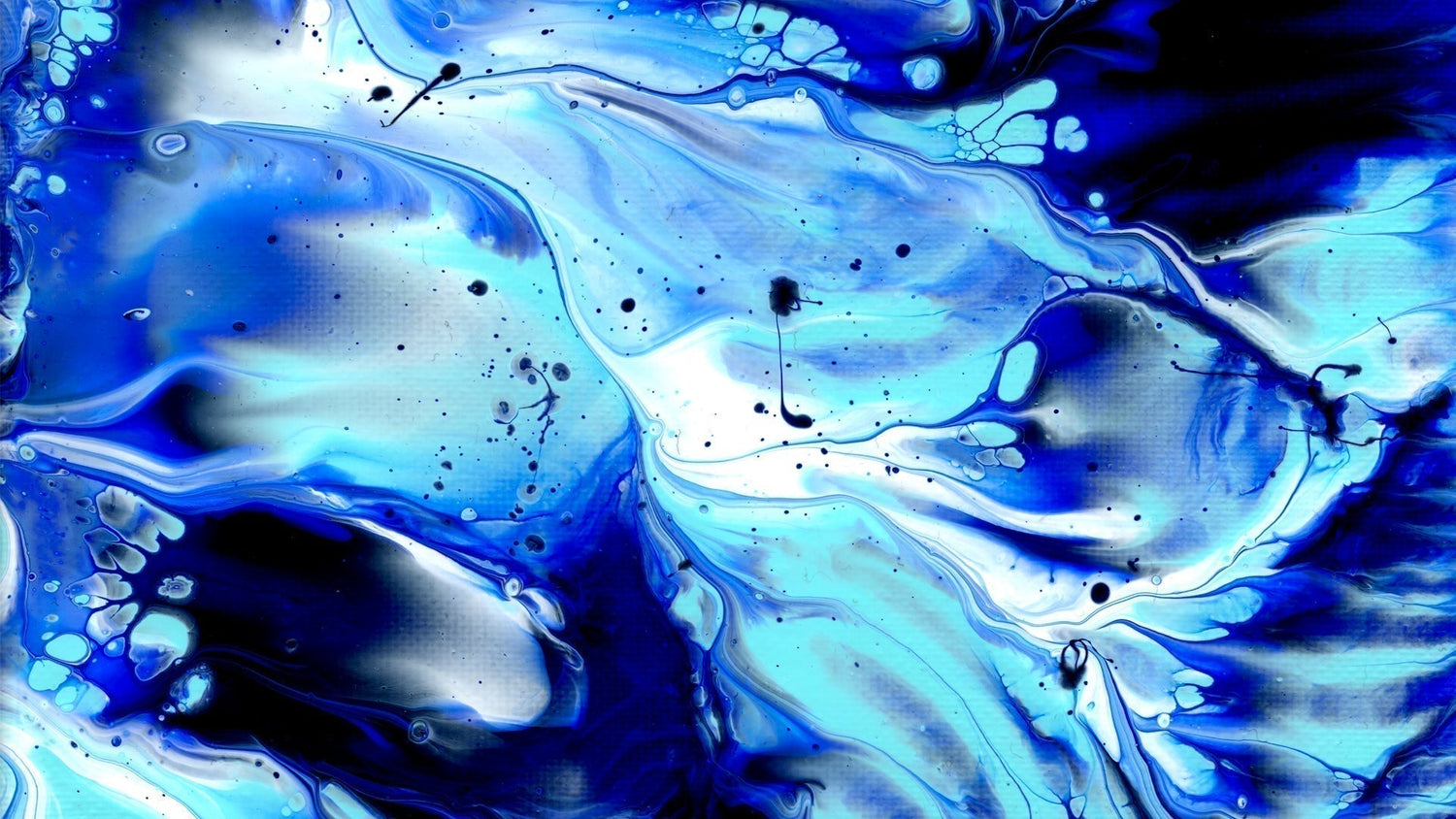
'Azure Waters I' Original Painting on Canvas © Bridget Bradley
|
Term |
University‑published definition (2025‑2026) |
Key Characteristics |
|
Original (Human‑Made) Art |
“Artworks that are introduced to be generated by a human artist, employing manual techniques or minimal digital assistance, are the benchmark for provenance and material authenticity” – Markus Appel, University of Würzburg |
Tangible materials, artist’s physical touch, provenance traceable to the maker. |
|
AI‑Generated Art |
“Artworks that are introduced to be generated by AI (rather than a human artist) are, however, often evaluated as a distinct category that requires explicit attribution of the underlying model and prompt” – Tanja Veronika Messingschlager & Markus Appel, Mind ascribed to AI and the appreciation of AI‑generated art (University of Würzburg, 2025) |
Prompt‑driven, often iterative, can blend with human edits; provenance includes model version and training data. |
|
Academic Consensus |
“Image‑synthesis models capable of producing complex artworks that appear nearly indistinguishable from human‑made works demand a quantitative assessment of human perception and preference” – Jules van Hees et al., Human perception of art in the age of artificial intelligence (Western Sydney University, 2025)frontiersin.org |
Highlights perceptual equivalence and the need for systematic study. |
3. Professional Artist Perspective Pros & Cons
🎨 Pros of Selling/Auctioning AI‑Generated Art
- Speed & Experimentation – Artists can test dozens of compositions in minutes, freeing time for curation and storytellingfrontiersin.org.
- New Revenue Streams – AI‑enhanced editions, NFTs, and collaborations with tech firms have opened lucrative licensing deals.
- Hybrid Signature – Many creators (e.g., Dahlia Dreszer) showcase AI‑crafted pieces alongside hand‑made work, positioning themselves as “media‑agnostic” innovatorsfrontiersin.org.
🎨 Cons of Selling/Auctioning AI‑Generated Art
- Authorship Ambiguity – Questions linger about who owns the output when the model was trained on scraped artworks without consent.
- Market Volatility – Auction prices have spiked (e.g., a $432,500 Christie's sale) but can swing sharply as collector sentiment shifts.
- Perceived “Less Craft” – Some buyers still prize tactile skill, risking lower resale values for purely digital AI piecesscience.org.
🖌️ Pros of Selling/Auctioning Original Art
- Tangible Provenance – Physical signatures, studio records, and material analysis give collectors confidence.
- Enduring Cultural Capital – History shows centuries‑old paintings retain or grow in value, a track record AI lacks.
- Unique Handcraft – The “human touch” remains a premium narrative for high‑end collectors and museums.
🖌️ Cons of Selling/Auctioning Original Art
- Production Time & Cost – Creating a single canvas can take weeks or months, limiting output volume.
- Logistical Overheads – Shipping, insurance, and conservation add expense compared with a digital file.
- Limited Reach – Traditional galleries may filter exposure; AI platforms can instantly reach global audiences.
4. Collector Perspective – Pros & Cons
📈 Collecting AI‑Generated Art
- Pros
- Diversification – AI works now represent ~35 % of fine‑art auction listings, offering a fresh asset classfrontiersin.org.
- Interactive & Customizable – Buyers can commission AI pieces with precise prompts, tailoring aesthetics instantly.
- Potential Upside – Early adopters have seen rapid appreciation, especially for limited‑edition prints tied to high‑profile AI models.
- Cons
- Legal Uncertainty – Copyright disputes over training data could affect resale rights.
- Ephemeral Value – Digital files risk obsolescence if formats change or platforms shut down.
- Authenticity Verification – Provenance must include model version and prompt logs, adding complexity to due‑diligence.
📉 Collecting Original Art
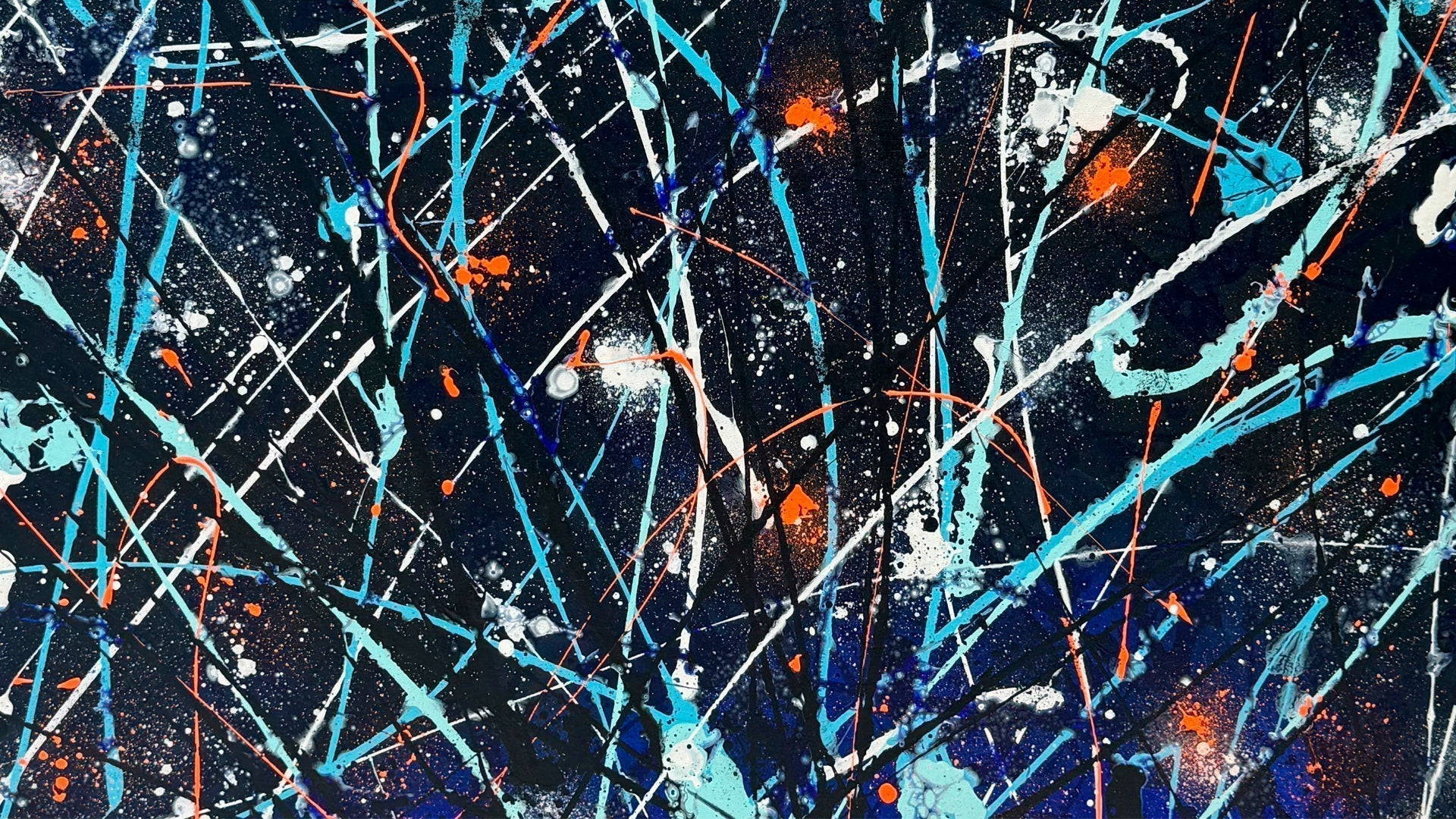
 'SILVER RAIN II' Original Painting on Canvas © Bridget Bradley
Pros
- Historical Credibility – Established appraisal standards and museum endorsement provide stability.
- Physical Presence – Tangible works create experiential value in private homes and galleries.
- Resale Liquidity – Auction houses have robust secondary‑market mechanisms for traditional media.
Cons
- Higher Entry Cost – Prices for comparable size and reputation are typically higher than digital equivalents.
- Storage & Conservation – Climate‑controlled environments and insurance raise ownership costs.
- Slower Market Reaction – Trends shift gradually; collectors may miss rapid spikes seen in AI‑driven sales.
5. Opinions From the Field (Referenced Quotes)
|
Person / Source |
Quote (2025‑2026) |
Relevance |
|
Fstoppers – “Where We Stand With AI‑Generated Art” |
“Artists are always held out front for either praise or as cannon fodder… the impact of AI is being felt way beyond the realm of the art world.” |
Highlights broader cultural ripple effects. |
|
Dahlia Dreszer (TIME interview) |
“I’m ecstatic about AI’s effect on art… I trained an AI on my style for a year and exhibited a fully AI‑created piece.”frontiersin.org |
Shows a successful hybrid practice. |
|
Artinfoland Magazine |
“The most impactful works will likely emerge from artists who wield AI thoughtfully, weaving it into narratives of care, conflict, and culture.”frontiersin.org |
Emphasizes intentional, curated AI use. |
|
Rebecca Xu (Syracuse University Today) |
“AI offers useful tools, but you still need to produce your own original work… I would encourage people … to embrace AI as a collaboration tool.”arxiv.org |
Balances optimism with the need for human input. |
|
University of Würzburg (2025) |
“Artworks that are introduced to be generated by AI (rather than a human artist) are, however, often evaluated as a distinct category that requires explicit attribution of the underlying model and prompt.” |
Provides a scholarly definition of AI‑generated art. |
|
Western Sydney University (2025) |
“Image‑synthesis models capable of producing complex artworks that appear nearly indistinguishable from human‑made works demand a quantitative assessment of human perception and preference.”frontiersin.org |
Underlines the perceptual equivalence challenge. |
Brief Summary
- Definition: Original art = fully human‑made; AI art = model‑generated from human prompts (University of Würzburg, 2025).
- Artist pros (AI): rapid iteration, new revenue streams, hybrid branding.
- Artist cons (AI): authorship disputes, copyright disputes, authenticity questions, price volatility, perceived lack of craft.
- Artist pros (Original): solid provenance, timeless cultural weight, tactile appeal.
- Artist cons (Original): slower production, higher logistics cost, limited digital reach.
- Collector pros (AI): portfolio diversification, customizability, early‑adopter upside.
- Collector cons (AI): legal gray zones, digital decay risk, complex provenance tracking.
- Collector pros (Original): proven market, physical experience, stable appraisal.
- Collector cons (Original): higher upfront cost, storage/insurance, slower market moves.
Final Thoughts
By 2026 the art ecosystem is dualistic: traditional craftsmanship coexists with AI‑augmented creation. Artists who treat AI as a collaborative tool assisting with their creative process rather than as a replacement, are able to leverage speed and creativity while preserving their authenticity and personal touch.
In the interim, collectors, are weighing legal certainty against the artist's potential to innovate, for example introduce new concepts or techniques in creating unique art. The healthiest market will likely be one where transparency prevails with clearly stated provenance when artists are using AI tools (including model version and prompt logs) to bridge the gap between the tactile legacy of original art and the algorithmic promise of AI‑generated works.
More Reference Articles
'Is AI art actually art? - University of Plymouth
'Co-creating art with generative artificial intelligence: Implications for artworks and artists'
If you need more information in relation to my original artworks, fine art and limited edition prints, please feel free to contact me using the contact form on this website or DM me on Instagram @bridgetbradleyart
Stay Connected to Bridget's Exclusive Circle
- Follow me on Instagram: @bridgetbradleyart for updates about new artworks, special offers, exhibitions and where I share studio sketches, behind‑the‑scenes moments, and exclusive previews of upcoming works.
-
Join the VIP Collector Circle: Subscribe to my exclusive insiders mailing list for early access to new releases, and special collector‑only offers. Sign‑up is free and confidential; just drop your email at bridgetbradleyart.com/pages/newsletter
Bridget Bradley Art - Contemporary art Brisbane & Sunshine Coast, Australia
Want Google to show more of my art and articles in your results? Go to Google Search Settings → “Preferred sources for specific topics,” add https://bridgetbradleyart.com under the relevant topic, and save the change.